Seasonal cleanup
Should You Remove Leaves or Mulch Them? A Kansas City Fall Cleanup Guide
Remove excess leaves when they form a thick, persistent covering over the grass. A light scattering does not call for the same response as wet piles across the yard. The goal is to keep the lawn uncovered enough to function, then decide whether you can manage the leaves on-site or need them collected and hauled away.
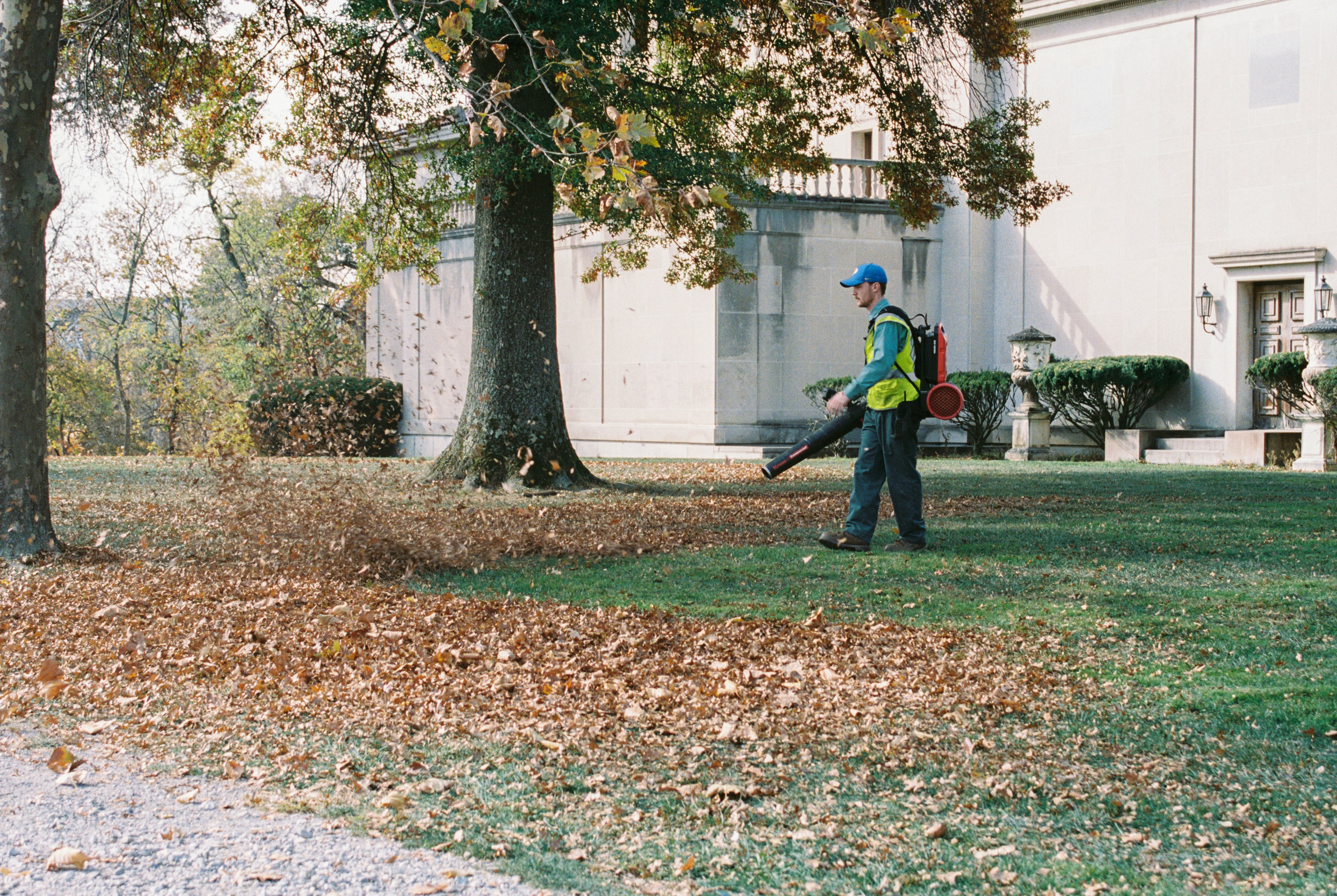
MU Extension's fall guidance specifically calls for preventing leaves from packing down and smothering turf. See its cool-season lawn calendar.
Look at the coverage before choosing a cleanup date
Walk the property instead of judging it from the driveway. Leaves rarely collect evenly.
Check the lawn beneath trees, fence corners, low spots and the strip behind shrubs. Also look at steps, paths and the entrance you use every day. You may find that the open lawn needs little attention while a few collection points need work now.
Use these observations to choose the next step:
| What you see | Practical next step |
|---|---|
| Scattered leaves with plenty of grass visible | Monitor accumulation; consider manageable on-site processing |
| Dense leaves hiding the lawn | Arrange removal of the excess rather than waiting for every tree to finish |
| Wet piles or repeated buildup in corners | Include those locations specifically in the cleanup request |
| Leaves already gathered into piles | Tell the provider where the piles are and whether hauling is needed |
| Leaves mainly in beds or a natural area | Decide separately what should stay and what should be cleared |
These are inspection prompts, not a fixed number of days that leaves are “safe” to leave. Weather, leaf volume and the condition of the grass all matter.
When can mulching be an option?
Mulching means breaking leaves into smaller pieces rather than collecting every leaf for disposal. It can suit manageable amounts, but it should not leave the lawn buried beneath a new layer of shredded material.
Treat the result as the test: if the material remains in piles or forms a covering over the turf, remove the excess. Do not keep driving over a saturated lawn just to process a pile.
If you want to keep organic material on your property, composting is another option. Dry leaves supply carbon-rich material for a compost pile, while grass clippings and food scraps supply nitrogen-rich material. Air and moisture are also needed. The EPA's home-composting guide explains how to combine them and what to leave out.
Composting gives you a place to use suitable leaves without leaving them across the lawn. It does require space and a plan for managing the material.
Should you wait until all the leaves have fallen?
Only if the lawn and access areas can reasonably wait. “One final cleanup” is a scheduling preference, not a reason to ignore heavy accumulation already on the grass.
Think about two different jobs:
- An earlier cleanup addresses buildup that is already in the way.
- A later cleanup addresses leaves that fall afterward.
Some properties need only the later visit. Others need an earlier visit plus follow-up. Ask for pricing and scope based on your actual tree cover and priorities rather than assuming every yard needs the same number.
Planning example: The front lawn has little leaf cover, but two backyard trees are still dropping heavily onto the grass. You might discuss clearing the backyard first and doing the full property later. That is a hypothetical option to price, not a promise about Metro Wide's scheduling or packages.
What affects a leaf-removal quote?
Useful details include the area covered, leaf volume, wet or compacted piles, access and whether leaves are scattered or already gathered. Also explain what you mean by “the whole yard.”
Break the requested work into areas:
- Front lawn and backyard.
- Fence lines and side yards.
- Beds or spaces around shrubs.
- Patio, walks and driveway.
- Existing piles that need hauling.
Mention narrow gates, locked access, pets and obstacles. If a pile contains branches, trash or other debris, say so. A leaf-removal request should not leave the provider guessing about mixed materials.
Metro Wide's leaf-removal service includes collection and hauling. Confirm the specific areas and any extra work in the quote.
Do you need to rake everything first?
Do not assume you need to prepare the yard before asking. Tell Metro Wide whether the leaves are scattered or piled and ask what preparation, if any, would be useful for the proposed work.
If you plan to handle disposal yourself, check your own city's current collection or drop-off instructions before filling bags or moving leaves to the curb. Kansas City, Liberty and neighboring cities do not necessarily use the same arrangements. A private hauling quote is also separate from a city collection program.
Keep fall cleanup coordinated
Tell anyone mowing the lawn about the cleanup plan and any newly seeded areas that need special treatment. For the broader sequence, see the Kansas City lawn care calendar.
If you also want shrubs trimmed, list that as a separate request. Plant type determines appropriate timing, as explained in our bush-trimming guide.
Request a leaf-removal quote or call 816-830-6107. Include your city or ZIP, the areas needing attention and whether the trees are still shedding.