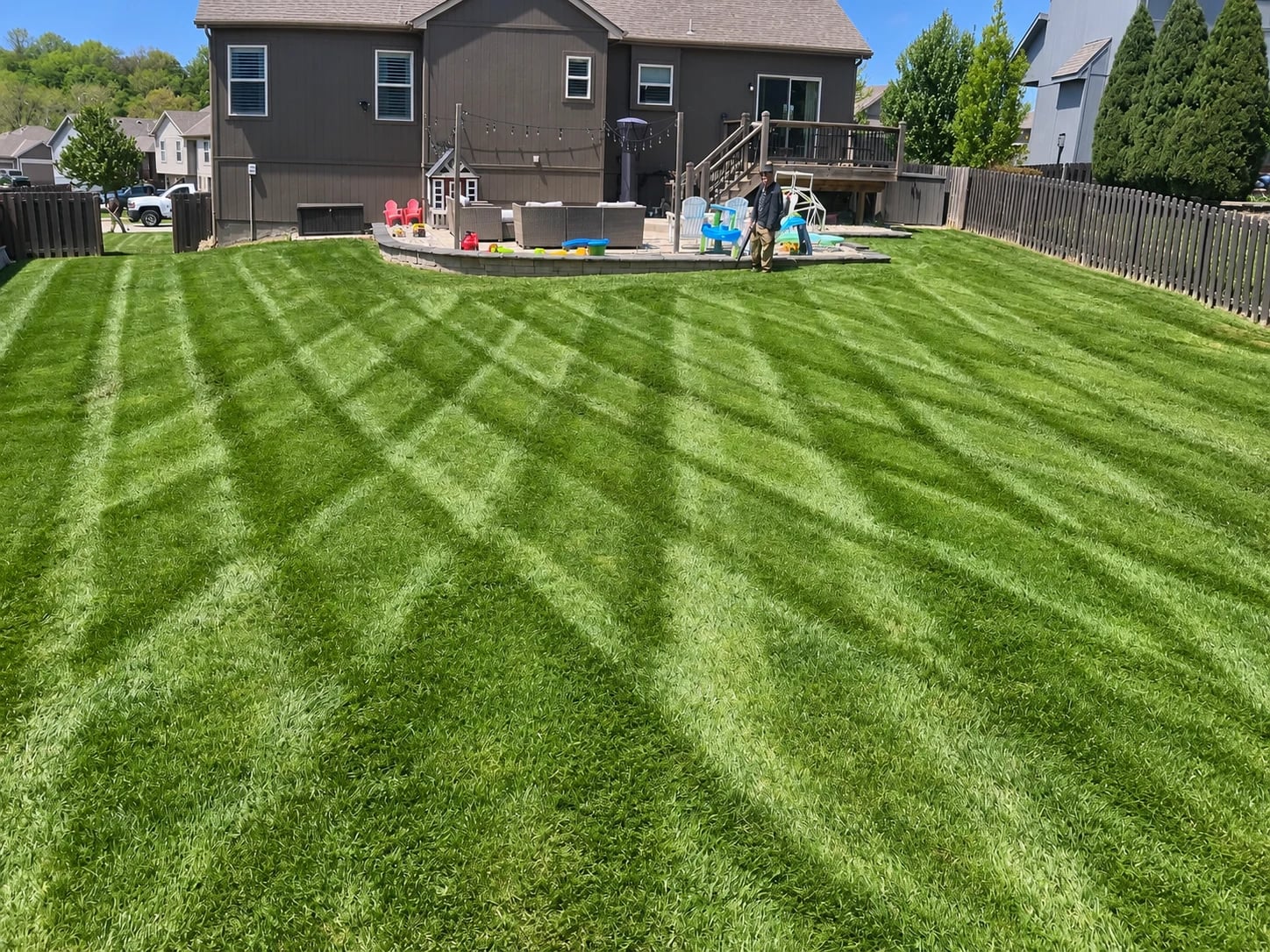
Mowing
How Often Should You Mow Your Lawn in Kansas City?
Weekly mowing is a useful starting point for a Kansas City lawn during active growth, but the grass should decide when the next cut happens. If a visit would remove more than one-third of the blade, the interval is too long for that growth rate. When growth slows, mowing may be needed less often.

That is why “weekly or every two weeks?” has no single year-round answer. You need to connect the schedule to the grass height you want to maintain.
Use the one-third rule to check your schedule
University of Minnesota Extension recommends removing no more than one-third of the grass blade in one mowing. Its example is a 3-inch lawn mowed before it reaches 4.5 inches. See its mowing guidance.
Here is the same calculation at several target heights:
| Target height after mowing | Height at which a cut would remove one-third |
|---|---|
| 3 inches | 4.5 inches |
| 3.5 inches | 5.25 inches |
| 4 inches | 6 inches |
These are mathematical examples, not a recommendation to let every lawn reach 6 inches. Choose an appropriate target for your grass first, then mow before growth exceeds its threshold.
Example: You maintain your lawn at 3.5 inches. Four days after mowing, it measures 4.25 inches. A few days later it reaches 5 inches. A weekly schedule may fit that stretch. Waiting another week would probably mean taking off too much at once.
Measure several representative places. One tall weed or a few seed stalks should not set the schedule for the whole lawn.
When weekly mowing makes sense
Consider weekly service when the lawn approaches its mowing threshold within about seven days. The deciding evidence is what the grass is doing between visits.
For two or three mowing cycles, record:
- The date of each cut.
- The approximate height before and after.
- Whether the mower left piles of clippings.
- Whether rain, irrigation or a recent application changed growth.
That small record gives you something concrete to discuss with a lawn-care provider. “It reaches 5 inches by the next visit” is more useful than “it always looks long.”
For a commercial property, also discuss the appearance you need between visits. A highly visible entrance and a less prominent turf area may have different priorities, even though both still need appropriate mowing practices.
Can you mow every two weeks?
Sometimes. A two-week interval can fit a period of slower growth if the grass stays within a reasonable mowing range. It is a poor fit when the lawn gets overgrown well before the next visit.
Compare the actual scope as well as the frequency. Ask whether a quote includes:
- The entire front and back lawn.
- Edging along the agreed hard surfaces.
- Trimming around areas the mower cannot reach.
- Clearing grass clippings from walks and driveways.
- Any additional work needed after an extended gap.
Do not choose the interval solely by counting visits. First decide whether that interval can maintain the lawn at the height and finish you want.
How short should you cut the grass?
For the tall fescue and Kentucky bluegrass mixes common in Missouri, MU Extension recommends a mowing height of about 3 to 4 inches. It also explains that cutting too short stresses grass and reduces rooting. This advice does not apply unchanged to zoysia or every other grass species. See MU Extension's mowing-height guidance.
Confirm the grass type before changing the mower setting. A number printed on a mower's adjustment lever may not represent an actual cutting height in inches.
Keep the target consistent with the season and lawn condition. Cutting extra low before a vacation creates a bigger immediate cut; it does not solve the problem of arranging the next visit.
What if rain delays mowing?
Wet grass can leave clumps, and the condition of the ground matters too. MU Extension discusses wet clippings and the value of changing mowing direction in its mowing-season advice.
After a delay, discuss how to return an overgrown lawn to its normal height without one drastic cut. Also ask how your provider handles rescheduling. There should be a clear conversation about weather, access and lawn condition before you need it.
If one part of the yard stays wet after the rest dries, mention that separately. It may need an assessment rather than a different mowing appointment. The watering guide can help you record what you are seeing.
Should you bag the grass clippings?
Routine bagging is not necessary when small clippings can disperse through the lawn. Large clumps need attention rather than being left in a mat. Returning suitable clippings also returns nutrients, as MU Extension explains.
If you have recently used a lawn product, follow its directions for clippings. Discuss special collection requests when arranging service rather than assuming every mow includes bagging.
Set up mowing around your property
Metro Wide's Kansas City mowing service includes mowing, edging, trimming and clearing grass clippings from hard surfaces, with the included areas established in your quote.
Request a mowing quote or call 816-830-6107. Include your city or ZIP, approximate lawn size, access details and preferred frequency. For the rest of the year, use the Kansas City lawn care calendar.